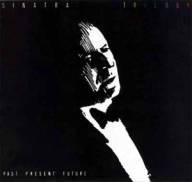
ODYSSEY TO
TRILOGY
by David McClintick
To experience artistic greatness in oneself, as Frank Sinatra has for more than four decades, is to experience a monumental mixed blessing. The unique gratification that great performers feel is accompanied, without exception, by a range of difficult pressures largely unknown to lesser artists. Greatness makes great demands. Virtuosity, almost by definition, is innovative, and to keep it from withering, an artist of Sinatra's stature must constantly explore new artistic territory. He struggles with aesthetic choices that rarely are posed to others. He reveals and invests more of himself emotionally. He takes bigger risks. And such burdens aren't lightened by the knowledge that they are unavoidable—that they must be borne if his genius is to be realized in triumphant performance.
Some people—perhaps Sinatra himself—would scoff at the application of lofty terms like “virtuosity” and “aesthetic choice” to a man who still calls himself a saloon singer. Yet the lexicon of high art is entirely appropriate—indeed, it is essential—to a proper appraisal of the Sinatra phenomenon and its principal medium, American popular music. The best of this music—from Kern and before to Sondheim and after—is as dynamic and integral a part of Western culture as are the songs of Schubert and Brahms. As popular music is loved by multitudes, so also must it be taken seriously by students of the culture. And, as Sinatra is pawed and cheered by mobs, so also must his significance be acknowledged: He is the most potent entertainer in the history of America, an authentic cultural institution, and an artist who knows the demands and frustrations of greatness—and the pleasures—on a level that transcends distinctions between the popular and classical arts.
In stating these truths, it is not my intention to solemnify unduly the artist or the art form. Above all else, Sinatra’s music is a source of profound joy both for him and the rest of us. For me, however, the joy always has been heightened by the knowledge that it is born of innovation, risk and struggle.
Sinatra chose early in his career not to imitate other singers, even though he had the voice and musicality to succeed simply by staying in the mold of the time. Instead, he took the risk of developing a different style, nurtured by an exacting physical and mental discipline which he imposed upon himself. By studying Dorsey and Heifetz, he learned that legato playing is crucial to proper phrasing in music of all types. Since he didn’t then have the lung capacity to sing legato in the way that they played, he ran laps at a Hoboken gym, and swam under water at local pools, holding his breath and thinking song phrases as he swam. The breath control he developed enabled him to phrase far more flexibly than other singers, and thus sing lyrics more dramatically. Although the public often rejects innovators, it embraced Sinatra. He brought about a fundamental change in the sound of popular singing in the Forties. Rather than conforming to the mold, he had broken it. Others tried to imitate him.
By the early Fifties, changes in music and public taste were confronting Sinatra with new choices and risks, culminating in a long period of frustration. Gimmickry governed music. Good songs, well sung, were out of style. It was a time of “Mule Train” and “Open The Door, Richard.” Unlike most singers, who performed pretty much what the record companies dictated, Sinatra rejected song after song that Columbia Records suggested to him and was embarrassed by several tunes he did record. Columbia finally dropped him. Appropriately enough, his final side was “Why Try To Change Me Now,” recorded in September, 1952.
A small record company called Capitol signed Sinatra without much enthusiasm in early 1953 at about the time he was hustling a small movie studio called Columbia Pictures into giving him a part in a film about Army life in Hawaii just before Pearl Harbor. Both ventures were big risks. If he failed at Capitol, his next stop would be the mystery label. If he failed in the film, not even home movies would have him. But somehow he knew. He knew he hadn’t lost his talent or his taste. Although his first efforts at Capitol were experimental and tentative, he made clear choices and set his course within the first year. Sinatra and Nelson Riddle found each other, and Sinatra renewed his determination to stick with songs of quality, leaving the dogs, whether in the window or elsewhere, to others. His singing voice was better than ever, richer and darker than in the Forties. In part, the change reflected his age (38 in 1953), but it also showed that the years of frustration, combined with continual tumult in his personal life, hadn’t broken him. On the contrary, he had deepened and matured. The sensitivity of his acting in “From Here To Eternity” also was evident in his singing. It was the sensitivity of an enormously talented man who had known protracted struggle and had emerged stronger than ever. His ballads were more passionate and poignant. One could hear it in “My One And Only Love,” recorded in May of 1953, and most spectacularly in Harold Arlen and Yip Harburg’s “Last Night When We Were Young,” recorded on March 1, 1954, three weeks and three days before he received the Academy Award for “From Here To Eternity.”
Important though the Oscar was in symbolic and commercial terms, it wasn’t the key to Sinatra’s artistic renaissance. The roots extended much deeper than the glitter of that night at the Pantages Theater. The award simply certified dramatically and publicly what those close to Sinatra had known for many months—that he had not suffered and balked in vain, and that the risks taken and choices made a year earlier had enabled his greatness to mature and flower anew. Nowhere was this more evident than in his renditions of “Last Night When We Were Young” and the other songs recorded for an album that was to be entitled “In The Wee Small Hours.”
The late Fifties brought a new challenge to Sinatra, a challenge he still faces at the dawn of the Eighties: How best to deal with the Age of Rock? Having changed music himself in the Forties, Sinatra discerned more clearly than most the significance of Presley, the Beatles, the Stones, Dylan and others. Their marks were indelible, as his had been and remained. Insight notwithstanding, Sinatra found that the new marketplace posed a number of dilemmas. He couldn’t ignore rock. Neither could he embrace it. He had to develop varying musical approaches and stay flexible as the new era unfolded. Much of what he has done since the Fifties has been carefully planned, but he has also acted occasionally on instinct. Some of the music he has performed has been tried and true, and some experimental. In every musical enterprise, however, he has been guided by a continuing determination to innovate, to interpret elder songs in new ways, and to seek out the best of the new music and make it his own.
Make it his own.
That always has been the key, and always will be. It is sometimes tough for a musician, and doubly difficult for a musical pioneer, to skirt material that, in one way or another, is ill-suited to him. One cannot innovate and experiment without making mistakes, and Sinatra has made quite a few. The world could have lived without his recordings of such Sixties hits as “Downtown,” “Winchester Cathedral,” “Moody River,” and “Don’t Sleep In The Subways.” These songs did nothing for Sinatra; he did nothing for them. On a much higher level of experimentation is the “Watertown” album, a suite of songs about a broken marriage in a small town. Composers of song suites are the first to acknowledge that they are risky undertakings. The songs must be judged not only individually but as parts of the larger work. Yet there is no spoken dialogue or other connective tissue to aid an inferior song or obscure it, as there is in a musical play. While “Watertown” contained a number of imaginative lyrical and melodic passages, only a few of its songs were of high quality and some of the orchestration was heavy-handed and grounded in clichéd rock patterns. Still, “Watertown” demonstrated again Sinatra’s willingness to take major risks that lesser artists would never attempt.
By and large, of course, Sinatra’s Sixties records were outstanding. “September Of My Years,” “Sinatra And Strings,” the Basie records and others require no comment. The recordings with Antonio Carlos Jobim showed a desire to try for something more enduring in the contemporary Brazilian mode than “Blame It On The Bossa Nova.” Melding the talents of two giants sometimes doesn’t work well, but the Sinatra-Jobim albums are classics. Jobim music became Sinatra music as naturally as “I Concentrate On You” became a Jobim song.
Occasionally a singer and a song don’t discover their common wavelength until they are in the recording studio together. Don Costa’s original chart for Sinatra’s 1968 recording of “Cycles,” by Gayle Caldwell, was a robust rock orchestration involving a studio full of musicians. But what had seemed right to both men in concept didn’t sound so good in the studio. Costa and Sinatra, coached by daughter Nancy, experimented with fewer and fewer players until barely more than a guitar and a piano remained. The result was a gentle rendition with a contemporary beat that became a modest hit.
Sinatra’s decision to return from retirement, or his “vacation” as he now calls it, represented still another big risk. He was nearly 58 years old. His voice and finely tuned musicianship had deteriorated from lack of use. Could he regain his skills? Did the public at large really want him? There was only one way to find out: Make a record and schedule a concert tour. The record, “Ol’ Blue Eyes Is Back,” turned out to be distinguished, despite some inevitable vocal rasp. Sinatra ignored the current crop of pop tunes and built the album around some lovely and unusual new songs by Joe Raposo. He also sang “Send in The Clowns” as it had never been sung before.
One hoped that the “Blue Eyes” album would lead promptly to more albums of equal quality. But it didn’t. Instead, over the next two or three years, Sinatra’s performing diverged onto two curiously paradoxical paths. His voice improved dramatically, thrilling concert audiences, and yet his recordings dwindled to a trickle.
By 1977 and 1978, he was singing better than he had sung since the Sixties and huge concert crowds around the world were greeting him with explosive enthusiasm. His opening concert at Radio City Music Hall in October, 1978, was an evening of theatrical and musical magic. But excitement over the extraordinary renewal of his performing powers only served to heighten disappointment at his lack of recording. No one, of course, was more perplexed than Sinatra. Twenty years into the rock era, he felt more intimidated than ever by the increasingly complex musical marketplace. He was gripped by doubt about what to record and about the nature of the contemporary audience for his records. He began and abandoned three albums, and recorded a few mediocre singles. Mostly, though, he agonized and brooded. It was another struggle that only superior artists endure. A lesser man under similar circumstances would have had no dilemma; he would have recorded nothing. But Sinatra was determined to move forward, to seek and find songs and musical concepts through which he could fulfill the still sizeable potential of his art.
Then, in the spring of 1979, Sonny Burke got an idea. It was an excellent idea, and while the Sinatra inner circle was elated, no one was surprised that Sonny Burke had thought of something good. After all, it was Burke’s steady hand and sensitivity that had guided the recording of more than a dozen Sinatra albums since the early Sixties—“September Of My Years,” “A Man And His Music,” the Jobim, Basie and Ellington records and others. In addition to being an outstanding producer, Burke has exceptional conceptual versatility—a firm grasp of what is good and bad in the music of all periods, past and present. Burke, like Sinatra himself, had been frustrated by Sinatra’s recording difficulties, and it seemed to Burke that Sinatra was selling himself short. By focusing so intently on the current musical scene, Sinatra was ignoring the universality and timelessness of his appeal. Comparing himself with the young artists of today, no matter how popular, was irrelevant. Anyone who had been mesmerizing audiences for forty years should be measuring himself by only one standard—his own—and asking himself only one question: What haven’t I sung, old and new, that will enable me to continue to innovate and leave my unique mark?
It occurred to Burke that while Sinatra had recorded more than 1,200 songs, there remained many excellent ones, especially old tunes, that he hadn’t touched. Burke understood Sinatra’s reluctance to record only old songs. That would be as limiting as doing only new ones. So why not do both? Why not select songs of all periods whose appeal is as timeless as Sinatra’s, and assemble a collection with as much historical sweep as his career? And since his career isn’t over, how about devising a way to focus musically on the future, as well as on the past and the present? The music logically divided into three records, which Burke called “Trilogy.” Sinatra felt the idea was the best he’d heard in many years, and the two men got down to the work of picking a team, choosing songs, and making recordings.
The “Trilogy” arrangers, of course, are preeminent, not only in the Sinatra world but in their own right as well.
Billy May first collaborated with Sinatra on the “Come Fly With Me” album in 1957 (Sinatra had tried to recruit him earlier) and has provided the instrumental context for many classic Sinatra performances such as “April In Paris” and several “Guys And Dolls” tunes.
The extraordinary amount that Don Costa knows about music, including how to play the guitar, he taught himself. Costa learned to arrange for singers by listening to Axel Stordahl’s arrangements for Sinatra and copying them onto blank staff paper. Sinatra began using Costa, however, not because he sounded like Stordahl but because he had developed an original touch and a special insight into the pairing of Sinatra with contemporary songs. Beginning with “Sinatra And Strings” in 1961, the collaboration has included the “Cycles,” “My Way” and “A Man Alone” albums.
Gordon Jenkins’s accomplishments defy summary. As an arranger, conductor and composer (for both pop singers and symphony orchestras), Jenkins has been a major figure in American music for decades. Of his many charts for Sinatra, perhaps the most memorable are those for the “September Of My Years” album (e.g. “It Was A Very Good Year,” “September Song,” and two of Jenkins’s own compositions, “This Is All I Ask” and “How Old Am I”.)
The most difficult phase of selecting the “Trilogy” songs was bowing to space limitations and deciding what to omit. But fortunately the selection process prompted Sinatra to focus systematically on what he hasn’t recorded, and he has identified enough songs for several more albums.
Part One of “Trilogy,” arranged by Billy May, includes songs written generally before the rock era, which began in 1954 but wasn’t in full swing until the late Fifties. Part Two, arranged by Don Costa, encompasses music composed from the beginning of the rock period to the present. Part Three is an original musical suite about the future written for Sinatra by Gordon Jenkins in mid-1979. Of the 20 songs in Parts One and Two, 16 are being recorded by Sinatra for the first time and four are new versions of songs he has recorded in the past.
THE
PAST
Los Angeles — September, 1979
Outside the recording studio on Sunset Boulevard the temperature hovers just under 90 degrees. Brush and forest fires are sprinkling soot on this seedy and vaguely menacing stretch of Hollywood from a sky that has turned from beige to rust to black as the sun has set. It is a Nathaniel West sort of evening, and thus is a perfect foil for the magical contrast one finds inside the studio. For inside, it is unmistakably a Mabel Mercer sort of evening. Frank Sinatra, Billy May, a 12-voice choir and a 55-piece orchestra are making a record of “My Shining Hour,” an extraordinary song composed for the Fred Astaire film “The Sky’s The Limit” in 1943.
“I can’t believe we never got to this one—I’ve been wanting to do it for 35 years,” says Sinatra, puffing on a Camel regular in the control room and recalling that one of his classics, “One For My Baby,” is from the same Harold Arlen-Johnny Mercer score.
“My Shining Hour” sounds easy to perform but, in fact, is quite difficult and has trapped many singers. Mabel Mercer has kept it alive through the years almost single-handedly. In addition to being a technical challenge, it is a song of such purity, grace and simple elegance that it reveals instantly any pretense, any superficial flourish, any trick in which the singer or arranger might be tempted to indulge. Sinatra and May both are equal to the occasion. Sinatra sings clearly and gently, with passion that is openhearted and yet slightly understated. May’s orchestration is delicate, economical and lovely. But even these people have to work hard at it. There is more than the usual amount of preliminary rehearsal, acoustic tinkering, section-balancing, level-checking and throat-clearing. Finally the master tape rolls. Take one is a false start. Take two is complete but Sinatra is struggling a bit. “To the top.” Take three is complete, and he comes in and listens to it. Good but not good enough. Take four is a false start. Take five is complete but ragged. Take six aborts at an unsynchronized ritard on the phrase “…an angel watching o’er me.” On take seven Sinatra conducts May conducting the orchestra through the ritard. Close. “One more.” Take eight is complete and is played back. May and Burke look pleased and hopeful. Sinatra, concentrating hard, reveals no emotion until the end. He looks up, smiles, sighs, and says “That’s a-nice.” Indeed.
Many of the vocal and instrumental attitudes in the “Shining Hour” recording also are present in the Sinatra-May rendition of Vincent Youmans’s ballad “More Than You Know,” written for a show called “Great Day” which flopped on Broadway in 1929. The structure and harmonies of “More Than You Know” were quite advanced for that period. As Billy May says, “It had a big edge on ‘Button Up Your Overcoat.’ ” “More Than You Know” is highlighted by a Chuck Finley flugelhorn improvisation that strolls unobtrusively alongside Sinatra and conveys in its own way the same message he is singing.
Sinatra finds “The Song Is You” irresistible. This is his fourth recorded version of it and May’s second collaboration with him. In the Forties, Sinatra performed the song as the elegant drawing-room ballad that Kern and Hammerstein had in mind when they wrote it for “Music In The Air” in 1932. In 1959, Sinatra and May recorded it up-tempo with a brass ensemble sound that didn’t employ strings. Now, Sinatra swings the song more than ever and is complemented by a lively, animated conversation among open and muted trumpets, trombones, saxophones and clarinets, with strings adding color and legato contrasts.
“It Had To Be You” was an early pick for “Trilogy.” It was the favorite song of the late Johnny Mercer, Sinatra’s close friend and favorite lyricist. However, it wasn’t written by Mercer but by Isham Jones, in whose band Gordon Jenkins used to play. Billy May’s arrangement here evokes the early Forties, as do his charts for “I Had The Craziest Dream” and “But Not For Me.” The period flavor, however, doesn’t overwhelm any of the arrangements; they contain string and wind passages that are entirely contemporary.
“They All Laughed,” which the Gershwin’s composed for “Shall We Dance” in 1937, displays Sinatra’s and May’s senses of humor like no other song in this collection. Sinatra sings with abandon and glee, and May’s arrangement is a romp—filled with imagination and surprises which I won’t spoil by enumerating here.
A word about solos and other individual performances: In addition to Chuck Finley on “More Than You Know” and “It Had To Be You,” one finds exquisite work by trumpeter Charlie Turner on “I Had The Craziest Dream,” and by trombonist Dick Nash on “It Had To Be You” and “But Not For Me.” And throughout the album, like a steady breeze at Sinatra’s back, is the outstanding piano work of Vinnie Falcone, Sinatra’s regular pianist and concert conductor (they call him Vincent at the Met), as well as the excellent playing of Sinatra’s other regulars: guitarist Al Viola, drummer Irv Cottler, and bassist Gene Cherico.
What one hears on Part One of “Trilogy” is the result not only of careful song selection and superior musicianship but also of considerable fine-tuning by Sinatra during the recording process. On these sooty September evenings he is re-recording several renditions that he and May had completed two months earlier and that seemed perfectly acceptable then. But after listening repeatedly to cassettes of the July sessions, Sinatra decided he could do better. He changed a few keys, slowed a few tempos, and generally gained firmer internal command of the songs, especially those he hadn’t recorded previously. The experience reminded Billy May of their 1963 recording of “Luck Be A Lady” for which he had written a very fast arrangement. Sinatra loved it, but asked that May slow the tempo slightly. Billy did, and an excellent record became an unforgettable one. The new re-recordings also recall Sinatra’s decision, late one night in February, 1976, to redo “Send In The Clowns” accompanied only by a piano. He had recorded it with a full orchestral arrangement in the spring of 1973 for the “Blue Eyes” album, but after singing it in concert halls around the world for the next two and a half years, the song had become a part of him in a way that it hadn’t in 1973. His command of it on the second record is striking, even chilling.
Such unrelenting attention to the nuances of the recorded repertoire is another manifestation of Sinatra’s artistry which is occasionally burdensome to him but is an integral element of his greatness.
THE
PRESENT
New York City — August, 1979
In a cavernous CBS studio on East 30th Street, Sinatra is going about the risky business of recording songs that other performers, with styles entirely different from his, have made famous. Framed by sound partitions, he stands behind a microphone and music stand facing Don Costa, who is perched on a podium surrounded by 50 musicians.
“Ready, Frank?” asks Sonny Burke from behind a cloud of cigarette smoke in the control room.
“I’ve been ready since I was twelve.”
“We’re rolling. ‘Just The Way You Are,’ take one.”
Costa strikes up the band, and it is easy to imagine the Count Basie orchestra playing this Costa chart. Anyone who says it swings is understating the case. Sinatra holds an earphone to his left ear and sways gently to the beat as he sings:
“Don’t go changin’, just to
please me.
You never let me down before.”
The rendition is as warm and affirmative—and purely Sinatra—as Billy Joel’s original is in the unique style of Joel, who wrote the song as well as making a big hit record of it. Sinatra knows he can perform such songs successfully only if he is comfortable with them and sings them in a style that suits him. But selecting a tune in the first place, and then deciding how to perform it, are highly subjective choices involving trial and error. Moreover, in the wake of a big hit like “Just The Way You Are,” which pervaded the world’s airwaves in 1978, it takes an agile sensitivity to perceive the song in other styles. One is under the spell of the original record. Initially, Sinatra had intended to do “Just The Way You Are” similarly to the way Joel does it, and that was his initial guidance to Don Costa. While rehearsing, however, Sinatra found that he wasn’t comfortable in the Joel style. And, with the help of pianist Falcone, he also discovered that “Just The Way You Are” works just as well as a song—and much better as a Sinatra song—if done in a swinging mode. Costa came to the same conclusion as he struggled unsuccessfully to write a Joel-like chart that was appropriate for Sinatra, and these discoveries led to the rendition that is being recorded this Wednesday evening in Manhattan.
But Sinatra isn’t satisfied just yet. Before the second take he asks Costa to “pull the tempo down a shade, just a hair’s breadth. It’s looking to do that.” Takes two, three and four are false starts. Take five is complete, and Sinatra comes into the control room to hear it. After the playback, Sinatra asks Costa to tighten up the tempo slightly at the end of the arrangement.
During take six, Sonny Burke stands before the control console, clapping and swaying to the beat. He hasn’t had this much fun since he recorded Sinatra and Basie in the Sixties. The take is complete and isn’t played back. It cannot be improved upon.
Sinatra puts his stamp equally effectively on the other songs—those such as “Love Me Tender” and “Song Sung Blue” that were identified initially with other artists, and lesser known contemporary works like “Summer Me, Winter Me,” by Marilyn and Alan Bergman and Michel Legrand; John Kandar and Fred Ebb’s “New York, New York”; and “You and Me,” by Peter Allen and Carole Bayer Sager. The arrangements for “Summer Me, Winter Me,” “MacArthur Park,” and “You and Me” are Don Costa’s best ballad orchestrations since he arranged and conducted the “Sinatra and Strings” album in 1961. His strings here (including guitars) narrate with expansive beauty and originality, and his reeds and winds comment and punctuate with a deep understanding of all the emotional messages.
At the end of the third evening in New York, after hearing the last playback of “Song Sung Blue,” Sinatra walks back into the studio from the control room and is momentarily startled by a prolonged standing ovation from the fifty instrumentalists and sixteen singers. He has never been more deeply moved by applause. These aren’t groupies outside a stage door, after all. They are fellow professionals in the intimidating confines of a recording studio who are grateful for the opportunity to have helped him create joy. And there is another dimension. Many of these musicians weren’t yet born when Sinatra began making records in 1939. A few weren’t born when he made “From Here To Eternity.” For a man who occasionally worries about appealing to young people, it is nice to be assured in such a touching way that his concern is baseless.
George Harrison’s “Something,” arranged by Nelson Riddle and conducted by Vinnie Falcone, is another example of the special mastery of a song that a great artist can achieve after sustained and thoughtful performance. Sinatra made a perfectly good record of “Something” with Lenny Hayton in 1970. But he has sung it frequently since then, and the new recording is one of the deepest and most moving performances he has ever given of any song. The arrangement, too, is extraordinary.
THE
FUTURE
Los Angeles —December, 1979
White hair tousled, eyes and ears cocked, Gordon Jenkins is rehearsing 154 musicians on the vast stage of the Shrine Auditorium with the authority and glow of a man who has composed the music himself.
He takes the orchestra and chorus only to bar ten before rapping his baton on the podium. “You can’t take your own tempo, kids. There are too many of you. You’ll have to take mine, strange as it may seem to you.”
From the top.
Rap-rap-rap. The tempo is okay but a flute is half a tone off in bar 22.
From the top.
Rap-rap-rap. “Singers, the pitch in bar 15 sounds a little non-union from here.”
From the top.
Rap-rap-rap. “This time it’s my fault. Strings, I’m not fond of that pizzicato in bars 21 and 22. Let’s bow it instead.”
From the top.
Jenkins is taking his time for good reason. He wrote and orchestrated this music only recently, and it never has been performed or heard except on a demo tape made by a few musicians in the composer’s home. Now, he is presiding over that crucial moment when all major participants in the creative process—composer, conductor, orchestra, chorus, soloist, and the music itself—come together for the first time. Always exciting, such moments can be chaotic and ultimately disastrous, but this time, after a little fine-tuning, everything fits.
The soloist in question, for whom the music was written, stands ten feet to the conductor’s right—listening, singing along softly, and liking what he hears. It is a ballad that doesn’t yet have a title but eventually will be called “I’ve Been There” and portrays a wise man of a certain age counseling a pair of anxious young lovers to relax and enjoy. Distinctively chromatic, with an introduction that utilizes some lovely modalities, “I’ve Been There” engages the listener on first hearing and seems likely to take its place with other Sinatra-Jenkins ballad collaborations which are among the most familiar recordings made anywhere in the world in the past three decades. “Here’s That Rainy Day,” “It Was A Very Good Year,” “September Song,” “This Is All I Ask,” “Hello Young Lovers,” “The September Of My Years,” “Send In The Clowns,” “Have Yourself A Merry Little Christmas,” “Lonely Town,” “The Night We Called It A Day,” “Autumn Leaves,” “I’m A Fool To Want You,” “Just Friends,” “I Can’t Get Started,” and “A Cottage For Sale” are only a few.
Like “This Is All I Ask,” the other Jenkins composition on this list, “I’ve Been There” stands on its own as a song. Unlike the other, however, it forms part of a suite that Jenkins has written for Sinatra. “Reflections On The Future” marks the first time that Sinatra has recorded a Jenkins suite and the first time that Jenkins has composed a suite expressly for Sinatra.
It is difficult to conceive of a more daunting assignment for a composer than being asked to write a suite of music about the future. The possibilities are so vast that whatever approach the composer chooses inevitably will be criticized by others who would have chosen a different approach. “Reflections On The Future” is no exception to this dilemma and is certain to become one of Sinatra’s most controversial recordings. Some will say that it is his finest hour. Others will say that certain of its lyrics are too personal. There can be no question, however, that “Future” includes the most stirring and imaginative music and lyrics that Gordon Jenkins has ever written. The work sweeps across the attitudinal and emotional terrain from sage cynicism, to humor, to vulnerability, to childlike wonder. It explores not only dreams like world peace and space travel but also some of Sinatra’s most private musings about his own future and, implicitly, about his past, e.g. his lifelong yearning to conduct a great symphony orchestra (“I would stand there, big and brave, and say ‘Ladies and gentlemen, play for me, play for me.’ ”).
Sinatra’s moving performance is enhanced by an exceptional symphony orchestra and chorus from which Jenkins draws power and grandeur, delicacy and tenderness.
For all its scope, “Reflections On The Future” does not stand as Sinatra’s final and definitive musical statement on his life and career. We have reason to hope that this is not his last record. On the contrary, it is my belief that “Future” and the rest of “Trilogy” are the inaugural recordings of a new period of Sinatra’s musical life—a period that promises to be as rich as any that has preceded it. After several difficult years, Sinatra is recording seriously once again. It should be needless to say, but there are people who invariably need reminding, that the man isn’t 35 years old anymore and doesn’t sound like it. But the millions around the world who have listened closely to Sinatra in the past year or two know that he possesses something more important now than a 35-year-old voice. He possesses a voice whose hues and resonance, particularly in its cello register, are more luxuriant than ever. His dramatic sensibilities have never been more acute. And his unmatched ability to infuse the rendering of a song with the pain and pleasure of life itself continues to grow.
In sum, the man’s greatness remains true to its essence—unflinchingly dynamic, still exploring, still struggling, but most important, still a source of towering excellence and abounding joy.