October 2007
Page 2
| Page 1 | CAIRO: Cairo Marriott, Cairo Museum, Giza and Sakkara: The Pyramids and Sphinx, Alexandria, The Mosque of Mohamed Ali |
| Page 2 | UPPER EGYPT: The M/S River Anuket, Cruising the Nile in Aswan, Abu Simbel, Temple of Philae, Temple of Kom Ombo, Temple of Horus at Edfu |
| Page 3 | UPPER EGYPT: Valley of the Kings and Queens, Dendera, Hot Air Balloon Ride, Karnak Temple, Luxor Temple |
| Page 4 | Tips for Traveling in Egypt |
UPPER EGYPT
Because the Nile flows from south to north, "Upper Egypt" actually refers to the southernmost part. Many of the great pharaonic temples lie in this region between Aswan and Luxor. The enduring temples come from the Greco-Roman period (332 BC to 395 AD). Earlier temples built on those sites were made of less durable materials and did not survive.
The M/S River Anuket
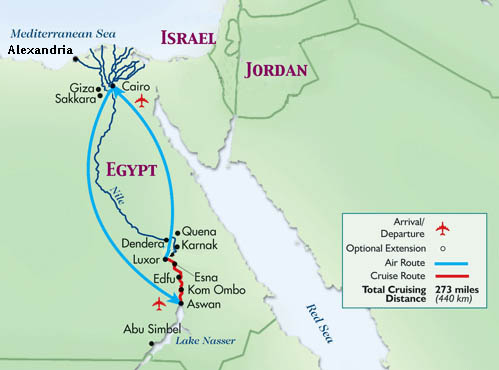
After visiting Cairo and the pyramids at Giza and Sakkara, we flew to Aswan and boarded our cruise ship, the M/S River Anuket. Our group of 138 travelers and 4 program directors settled into our home for the week.
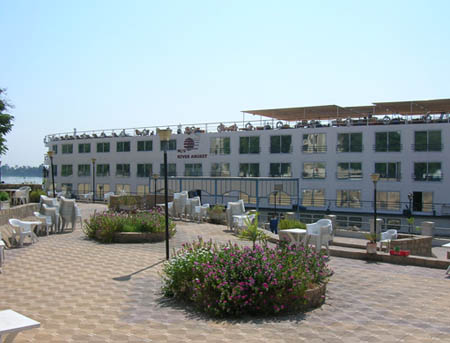
On the left is a picture of the ship. The guest rooms and reception area were on 3 floors, with the restaurant and 2 shops on the lowest deck.
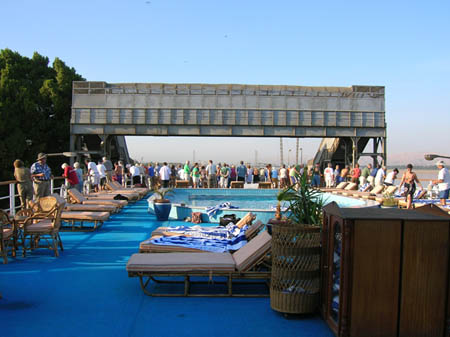
On the right is the sun deck. The bridge hovering over the top is a part of the Esna lock, which we passed through on the way to Luxor (see Esna on the map above).
 |
 |
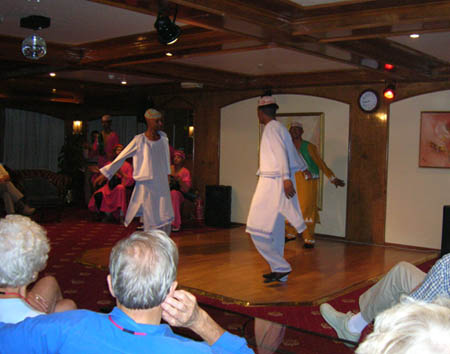
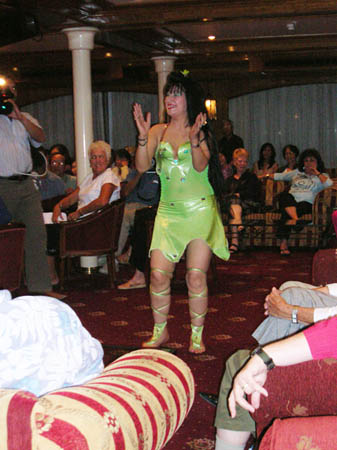
The lounge, one deck below the sun deck, was where we had our meetings, lectures and entertainment. On the left are a group of Nubian dancers, accompanied by musicians (in red in the background), and on the right, a belly dancer. The Nubians are native to southern Egypt and northern Sudan and known for their arts and crafts.
 |
 |
Cruising the Nile
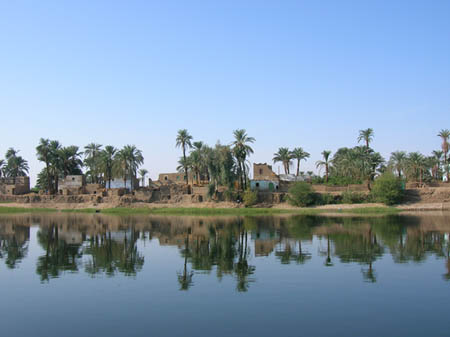
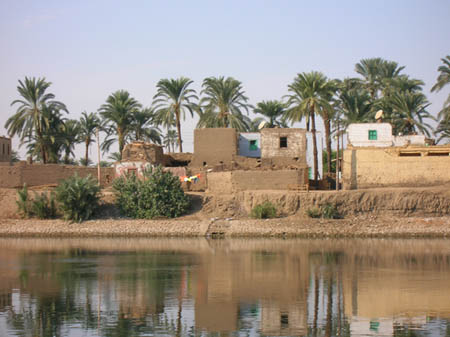
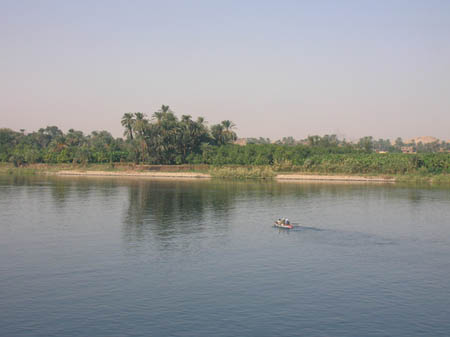
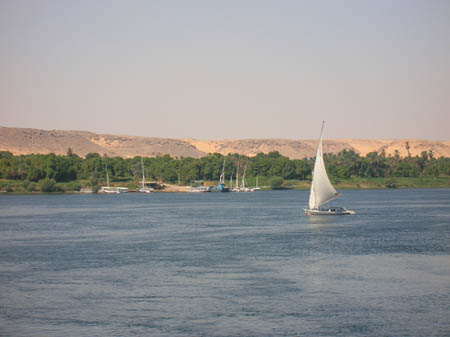
One of the most wonderful aspects of being on the boat was gently cruising the Nile and seeing life go by on the shores and in the water, as I watched from my cabin or from the sun deck. Here are a few shots of life along the Nile. Be sure to check out the video clip!
 |
 |
 |
Click here to see a video clip of cruising along the Nile. |
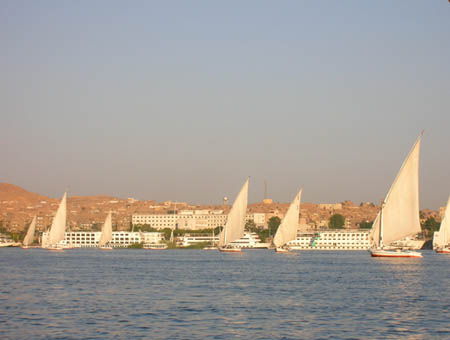
The felucca is a traditional sailboat used along the Nile for transporting goods and, more currently, tourists. Our felucca ride was smooth and peaceful. I love the graceful curve of the sails!
 |
 |
Abu Simbel
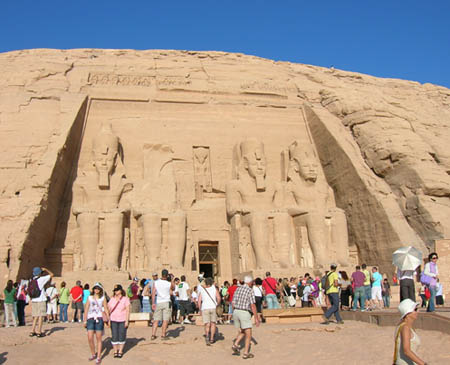
Abu Simbel is one of the most impressive pieces of architecture built by Ramses II, who, as you will see, did quite a lot of building. When the Aswan High Dam was being built, the creation of Lake Nasser would have left this incredible monument underwater. Through an international effort of 51 nations, the 2 temples were carved out of the mountain, dismantled, and moved to a higher plateau, where it was safe from the waters.
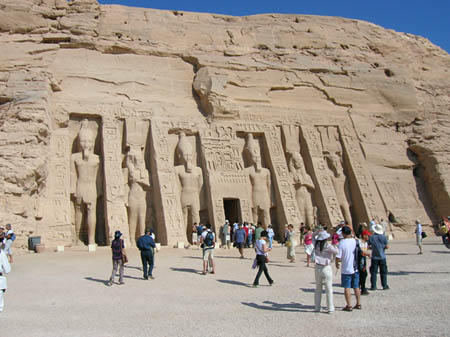
Abu Simbel features 2 temples. The Great Temple is dedicated to Ra, the sun god, and to Ramses himself. The facade features 4 seated statues of Ramses, each 66 feet high.
 |
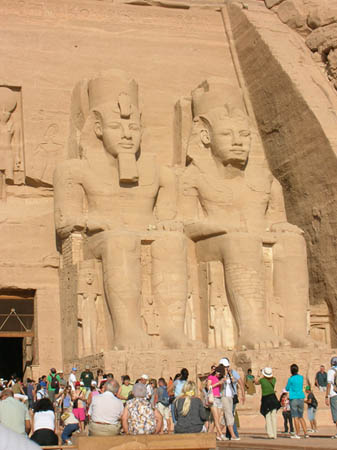 |
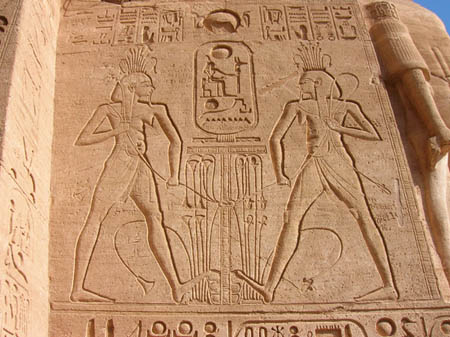
On the left is a beautifully preserved example of relief carvings from the side of the Ramses statue. On the right is the facade of the smaller temple, dedicated to Ramses' beloved wife, Nefertari, and the goddess Hathor. These statues are about 33 feet high.
 |
 |
Temple of Philae
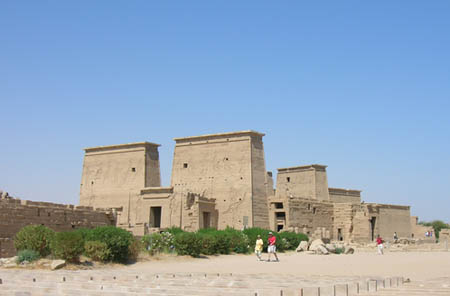
Located on a small island south of Aswan, the Temple of Philae, like Abu Simbel, was rescued and moved to higher ground to avoid being lost under the waters. Actually a complex of temples, the main temple was dedicated to the goddess Isis. Philae was the last place where the ancient Egyptian religion was practiced. It was closed down in the 6th century AD by the Byzantine emperor Justinian, as Christianity became the dominant religion.
 |
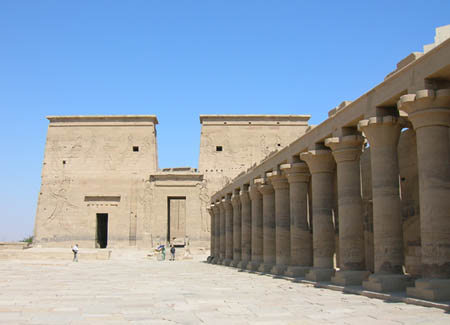 |
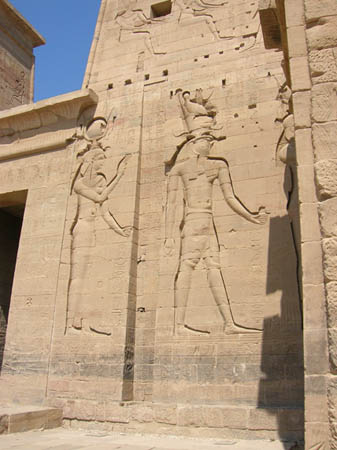
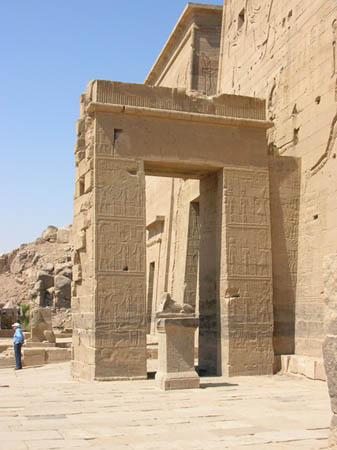
Here's a close-up of the reliefs on the front pylon (left) and a beautiful arch in front of the pylon (right).
 |
 |
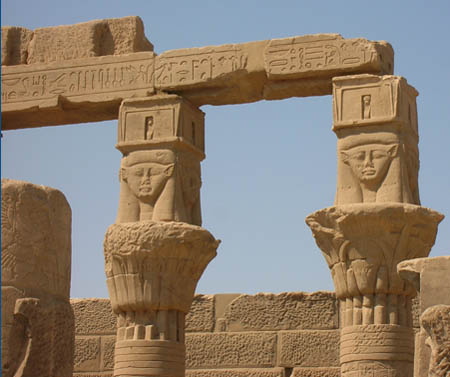
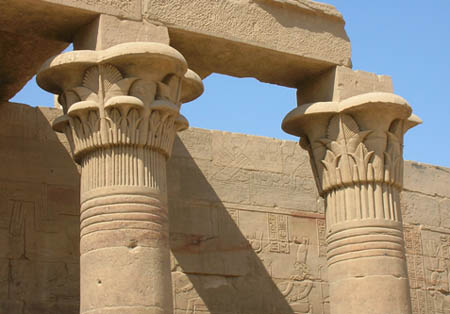
The columns on the left feature the cow goddess Hathor, who, unlike most gods and humans in early Egyptian art, is portrayed full-face, rather than in profile. The tops of the columns on the right depict papyrus plants.
 |
 |
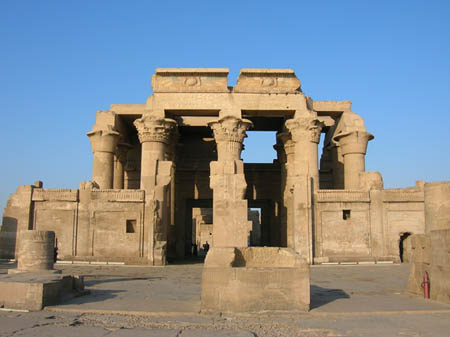
Temple of Kom Ombo
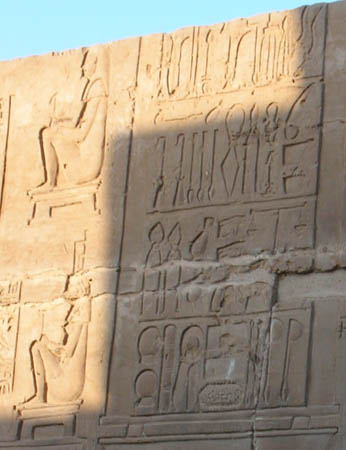
Sailing further down the Nile (that means going north, since the Nile flows toward the Mediterranean), we come to Kom Ombo and its beautiful temple. The photo on the right shows a famous relief depicting what scholars believe are surgical instruments. Note the birthing stools on the left side.
 |
 |
Temple of Horus at Edfu
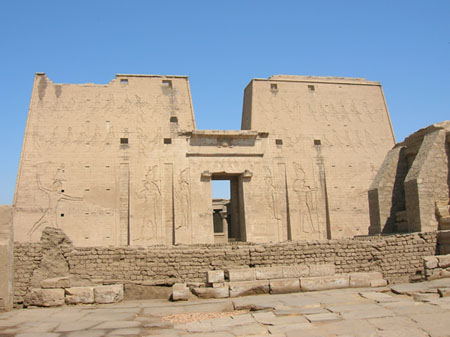
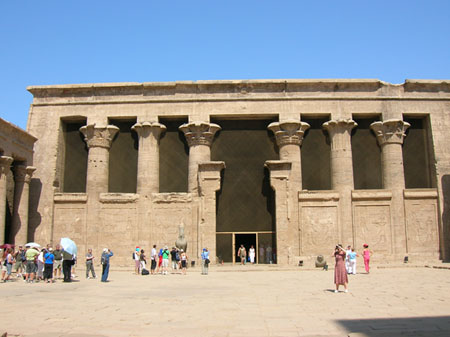
This exquisite temple was my favorite! It's the best preserved ancient temple in Egypt, and perhaps in all the ancient world, and the one where you get the best experience of what such a temple was like. On the left is the facade, behind which is the forecourt. The picture on the right is taken from within the forecourt, looking at the entrance to the temple.
 |
 |
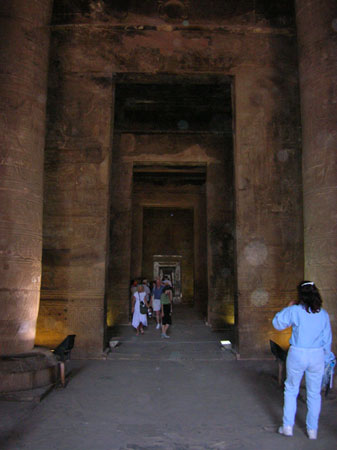
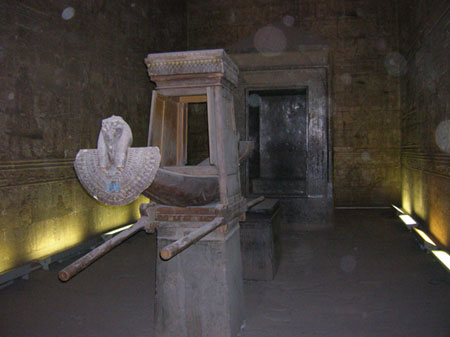
Inside the temple are a series of halls separated by tall arches (left), leading to the "Holy of Holies" (right). The structure of a temple was meant to emulate a pyramid on its side, where the front of the temple was the base of the pyramid and it narrowed as it approached the sanctuary, at the apex.
When the temple was functioning, only the high priests and the pharaoh were allowed to enter the inner sanctuary, which held an iconic statue of the presiding god or goddess, in this case Horus. The people could enter the front halls to worship and leave offerings.
 |
 |
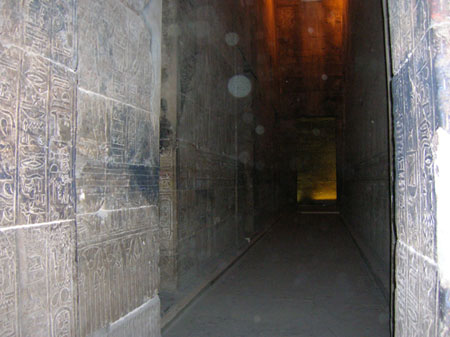
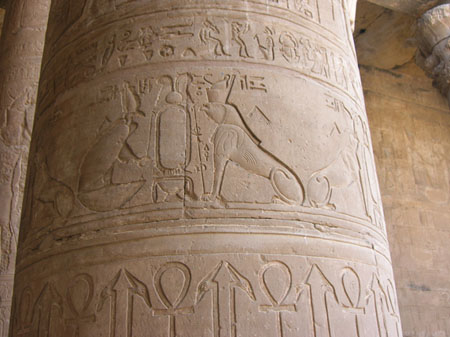
On the left is a side hallway, its walls covered with hieroglyphics. On the right is a column with some typical reliefs. Notice the crowned falcon head on the lion's body, which represents Horus, and on the bottom the "ankh," the symbol of life.
 |
 |
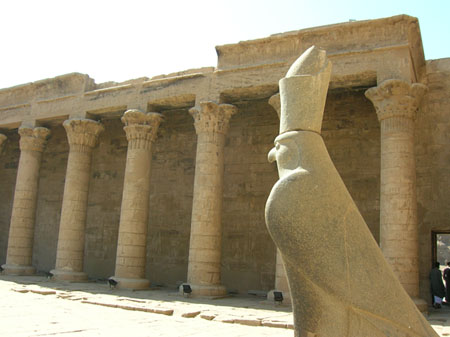
This photo is taken from the front of the temple, looking into the forecourt. The entrance to the temple is flanked by this beautiful statue representing Horus as the crowned falcon.
 |
Click here to go to page 3.
Click here to go to the top of this page.
Click here to go to Sharon's Good Life Coaching website.